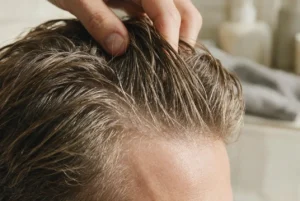
Eczeem op de hoofdhuid is een huidaandoening waarbij ontstekingsreacties zorgen voor rode, schilferende en jeukende plekken. De klachten verschillen sterk per persoon: bij de een blijven ze mild, bij de ander zijn ze langdurig en hinderlijk. Een juiste diagnose is daarom belangrijk, want eczeem kent meerdere vormen met elk een eigen oorzaak en aanpak.
Bij Hairtec zien wij regelmatig mensen met een gevoelige of ontstoken hoofdhuid die zich afvragen of dit invloed heeft op hun haargroei of op een mogelijke behandeling in de toekomst. Een gezonde, kalme hoofdhuid vormt de basis voor zowel een natuurlijke haargroei als een succesvol resultaat van eventuele aanvullende behandelingen.
Wat is eczeem op de hoofdhuid?
Eczeem op de hoofdhuid is een verzamelnaam voor ontstekingen van de behaarde huid. De aandoening uit zich in roodheid, schilfering, jeuk en soms kleine, pijnlijke plekjes. Eczeem is niet besmettelijk, maar kent wel verschillende vormen die op het oog op elkaar lijken. De drie die het meest voorkomen, zijn seborroïsch eczeem, contacteczeem en atopisch eczeem. Omdat ze in oorzaak en behandeling van elkaar verschillen, is een juiste herkenning belangrijk.
Soorten eczeem op de hoofdhuid
Hoofdhuid eczeem komt in verschillende vormen voor. De drie meest voorkomende zijn seborroïsch eczeem, contacteczeem en atopisch eczeem. Hoewel ze oppervlakkig op elkaar lijken, verschillen ze in oorzaak, patroon en behandeling. Het herkennen van het juiste type is daarom de eerste stap naar een passende aanpak.
Seborroïsch eczeem op de hoofdhuid
Seborroïsch eczeem is de meest voorkomende vorm van eczeem op de hoofdhuid. Het herkent u aan vettige, gelig-witte schilfers, roodheid en jeuk, vooral op plekken met veel talgklieren zoals de kruin, de haarlijn, achter de oren en rond de wenkbrauwen. De oorzaak wordt in verband gebracht met een overgroei van de gist Malassezia. Deze gist komt van nature op de huid voor, maar lokt bij sommige mensen een ontstekingsreactie uit.
De klachten verergeren vaak in de koude maanden, bij stress en bij overmatig transpireren. Seborroïsch eczeem komt zowel bij volwassenen als bij zuigelingen voor. Bij baby’s staat de aandoening bekend als berg.
Contacteczeem op de hoofdhuid
Contacteczeem ontstaat door direct contact van de hoofdhuid met een prikkelende of allergene stof. De huid reageert ter plaatse met roodheid, jeuk, een branderig gevoel en soms kleine blaasjes. Veelvoorkomende veroorzakers zijn haarverven met paraphenyleendiamine (PPD), permanenten, sterk geparfumeerde shampoos en stylingproducten met agressieve conserveermiddelen.
Er bestaan twee varianten. Bij de irritatieve vorm reageert de huid rechtstreeks op een prikkelende stof. Bij de allergische vorm valt het immuunsysteem een specifieke stof aan. Een allergietest bij de dermatoloog geeft duidelijkheid over welke variant het betreft.
Atopisch eczeem op de hoofdhuid
Atopisch eczeem, ook wel constitutioneel eczeem genoemd, berust op een aangeboren gevoeligheid van de huid. Het komt vaak samen voor met andere atopische aandoeningen zoals astma, hooikoorts of voedselallergieën. Op de hoofdhuid uit het zich in droge, schilferende en intens jeukende plekken die bij krabben kunnen openbarsten.
Deze vorm komt vaker voor bij kinderen en jongvolwassenen, maar kan op elke leeftijd ontstaan. Het verloop wisselt: rustige periodes worden afgewisseld met opvlammingen. Stress, droge lucht en allergenen kunnen de symptomen tijdens zo’n opvlamming versterken.
Aanbevolen voor u
Op basis van de inhoud van deze pagina hebben wij relevante producten geselecteerd. Ontdek welke producten het beste bij u passen.
Symptomen van eczeem op de hoofdhuid
De symptomen verschillen per type en per persoon, maar er zijn enkele kernsignalen die bij vrijwel alle vormen terugkomen. Let daarbij op de volgende verschijnselen:
- Roodheid op de hoofdhuid, in losse vlekken of over een groter gebied
- Schilfering, van fijne witte schilfers tot dikkere, gelige korstjes
- Jeuk, variërend van mild tot intens en moeilijk te onderdrukken
- Een branderig of gespannen gevoel op de behaarde huid
- Kleine, vochtige plekjes of blaasjes bij ernstigere vormen
- Krabwondjes en korstvorming als gevolg van krabben
Wanneer de klachten langer dan enkele weken aanhouden, na elke behandelpoging terugkeren of samengaan met haaruitval, is een gericht consult bij de huisarts of dermatoloog aan te raden.
Oorzaken en triggers van eczeem op de hoofdhuid
Eczeem op de hoofdhuid heeft zelden één duidelijke oorzaak. Meestal gaat het om een combinatie van een gevoelige huidaanleg en externe triggers die de klachten uitlokken of verergeren. Inzicht in de eigen triggers is daarom een belangrijk onderdeel van de aanpak op langere termijn.
Genetische aanleg speelt bij vrijwel alle vormen van eczeem een rol. Wanneer ouders, broers of zussen een atopische aandoening hebben, is de kans groter dat de hoofdhuid gevoeliger reageert op prikkels. Daarnaast kunnen hormonale schommelingen, een verzwakte huidbarrière en een verstoorde huidmicroflora bijdragen aan de klachten.
De meest voorkomende externe triggers zijn:
- Stress en emotionele belasting
- Koude, droge lucht in de herfst en winter
- Stevig transpireren tijdens sport of warmte
- Agressieve shampoos, stylingproducten of haarverven
- Te warm douchen of te vaak wassen met heet water
- Bepaalde voedingsmiddelen bij gevoelige personen
- Hormonale veranderingen rond menstruatie, zwangerschap of overgang
Het bijhouden van een kort triggerdagboek gedurende enkele weken helpt vaak om patronen te herkennen en gerichte aanpassingen door te voeren.
Eczeem hoofdhuid en stress
Stress is een van de meest onderschatte triggers van eczeem op de hoofdhuid. De combinatie eczeem hoofdhuid en stress komt in de praktijk regelmatig voor. Bij langdurige stress maakt het lichaam meer cortisol aan, een hormoon dat de huidbarrière verzwakt en het ontstekingsniveau verhoogt. Het gevolg is een hoofdhuid die gevoeliger reageert op prikkels en eerder in een ontstoken fase belandt.
Stress veroorzaakt zelden zelf eczeem, maar kan een sluimerende aanleg activeren of een rustige fase verstoren. Voldoende slaap, regelmatige beweging, ontspanningsmomenten en een evenwichtig voedingspatroon helpen om de stressrespons te dempen en de hoofdhuid rustig te houden.
Verschil tussen eczeem, roos en psoriasis op de hoofdhuid
Eczeem, roos en psoriasis op de hoofdhuid worden vaak met elkaar verward, omdat ze alle drie schilfering en jeuk veroorzaken. Toch verschillen ze wezenlijk in oorzaak, beeld en behandeling. De volgende tabel zet de belangrijkste verschillen op een rij.
| Kenmerk | Eczeem | Roos | Psoriasis |
|---|---|---|---|
| Aard | Ontstekingsreactie van de huid | Versnelde celafstoting, milde vorm van seborroïsch eczeem | Auto-immuunaandoening met versnelde celdeling |
| Schilfers | Vettig of droog, witgelig | Losse witte schilfers | Dikke, zilverwitte schilfers |
| Roodheid | Aanwezig, soms uitgebreid | Beperkt of afwezig | Sterk afgebakende rode plekken |
| Jeuk | Mild tot intens | Mild | Mild tot matig |
| Begrenzing | Vaag en onregelmatig | Vaag | Scherp afgebakend |
| Locatie | Hele hoofdhuid, vaak haarlijn en kruin | Vooral kruin en achterkant | Hoofdhuid, ellebogen, knieën, nagels |
| Verloop | Periodes van rust en opvlamming | Aanhoudend mild | Chronisch met opvlammingen |
Bij twijfel over het type aandoening geeft een consult bij de huisarts of dermatoloog uitsluitsel. De diagnose is belangrijk, omdat de behandeling per aandoening verschilt en een verkeerde aanpak de klachten kan verergeren.
Eczeem op de hoofdhuid en haaruitval
Eczeem zelf veroorzaakt zelden directe of blijvende kaalheid. Tijdens een actieve fase kan er echter wel tijdelijke haaruitval optreden. De ontstekingsreactie verstoort de haargroeicyclus, waardoor meer haren tegelijk in de uitvalfase belanden. Daarnaast kan krabben de haarschacht beschadigen. Alleen in zeldzame gevallen ontstaat er littekenweefsel dat de follikels blijvend aantast.
Wanneer het eczeem onder controle komt, herstelt de haargroei in de meeste gevallen vanzelf, doorgaans binnen drie tot zes maanden. Het behandelen van de hoofdhuid is daarmee tegelijk de beste investering in het haar zelf. Aanhoudende of duidelijk zichtbare haaruitval rondom de aangedane plekken vraagt om medisch advies, omdat een onderliggende oorzaak verdere beoordeling kan vereisen.
Behandeling van eczeem op de hoofdhuid
De behandeling van eczeem op de hoofdhuid hangt af van het type, de ernst en het verloop van de klachten. De eerste stap is bijna altijd het tot rust brengen van de huid met milde, niet-prikkelende verzorging en het wegnemen van bekende triggers. Wanneer dat onvoldoende helpt, volgt een gerichtere medische behandeling, eventueel na een dermatologisch consult.
De aanpak verschilt per vorm. Bij seborroïsch eczeem zijn antischimmel- en ontstekingsremmende shampoos vaak voldoende. Bij contacteczeem ligt de nadruk op het opsporen en vermijden van de uitlokkende stof. Bij atopisch eczeem worden vette, herstellende verzorgingsproducten gecombineerd met geneesmiddelen op recept tijdens opvlammingen.
Welke shampoo bij eczeem op de hoofdhuid?
Een goede eczeem hoofdhuid shampoo speelt een belangrijke rol in de dagelijkse verzorging. Een geschikte shampoo voor eczeem hoofdhuid is mild en parfumvrij en bevat geen sterke sulfaten, kleurstoffen of conserveermiddelen die de huid kunnen prikkelen. Was het haar niet dagelijks maar twee tot drie keer per week, en gebruik lauwwarm water in plaats van heet water.
Bij seborroïsch eczeem helpen medicinale shampoos met ketoconazol, zinkpyrithion, seleniumsulfide of teer. Deze middelen remmen de overgroei van Malassezia en verminderen de ontsteking. Laat de shampoo enkele minuten op de hoofdhuid inwerken voordat u uitspoelt, zodat de werkzame stof voldoende kan inwerken. Bij hardnekkige of hevige klachten kan de huisarts kortdurend een lotion of crème met een lichte corticosteroïde voorschrijven.
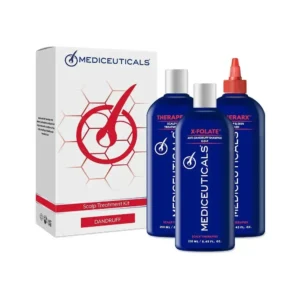
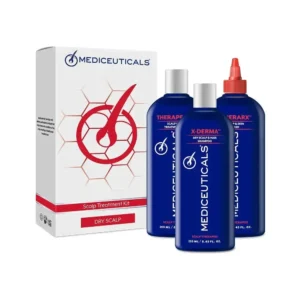
In onze winkel bieden wij enkele ondersteunende verzorgingsproducten aan voor mensen met een gevoelige of geïrriteerde hoofdhuid. De Mediceuticals X-Derma Shampoo is ontwikkeld voor een dermatologisch gevoelige hoofdhuid, terwijl de Mediceuticals Solv-X Shampoo gericht is op hardnekkige schilfering. De Mediceuticals Scalp Treatment Kit voor anti-roos biedt een complete dagelijkse routine met shampoo, lotion en conditioner.
Deze producten zijn dagelijkse verzorgingsmiddelen en geen vervanging voor een medische behandeling. Wij raden u aan om aanhoudende klachten eerst te bespreken met een huisarts of dermatoloog, zodat de keuze van een product aansluit op uw situatie en op een eventuele onderliggende oorzaak.
Wat te doen tegen eczeem hoofdhuid
Naast een passende shampoo zijn er enkele aanvullende maatregelen die helpen om de hoofdhuid rustig te krijgen en te houden. Wie zich afvraagt wat te doen tegen eczeem hoofdhuid, begint het beste bij eenvoudige aanpassingen in de dagelijkse routine. Vermijd krabben zo veel mogelijk, want dat verergert de ontsteking en kan tot infectie leiden. Spoel het haar grondig uit om productresten te verwijderen en knip de nagels kort om onbewuste schade tijdens het slapen te beperken.
Beperk tijdens een opvlamming het gebruik van stylingproducten met alcohol, parfum en sterke conserveermiddelen. Een zachte, siliconenvrije conditioner houdt het haar soepel zonder de hoofdhuid extra te belasten. Drink daarnaast voldoende water, eet evenwichtig en zorg voor voldoende slaap, omdat de huid hierop reageert. Bij langdurige of intense klachten is een afspraak bij de huisarts of dermatoloog de volgende stap.
Wanneer u met eczeem op de hoofdhuid naar een arts gaat
In veel gevallen verlopen de klachten mild en zijn ze goed te beheersen met aangepaste verzorging en milde shampoos. In sommige situaties is een afspraak bij de huisarts of dermatoloog wel verstandig, omdat de klachten kunnen wijzen op een ernstigere vorm of een onderliggende aandoening die specifieke behandeling vereist. Plan een consult wanneer u een of meer van de volgende signalen herkent:
- Klachten die ondanks milde verzorging langer dan vier tot zes weken aanhouden
- Aanhoudende, intense jeuk die de slaap verstoort of het dagelijks leven beperkt
- Pijnlijke, vochtige of openliggende plekken op de hoofdhuid
- Tekenen van infectie zoals gele korstjes, etterige afscheiding, koorts of snelle uitbreiding
- Zichtbare haaruitval rondom de aangedane plekken
- Snel opkomende, scherp afgebakende plekken die op psoriasis kunnen wijzen
- Klachten bij jonge kinderen of zuigelingen die niet binnen enkele weken verbeteren
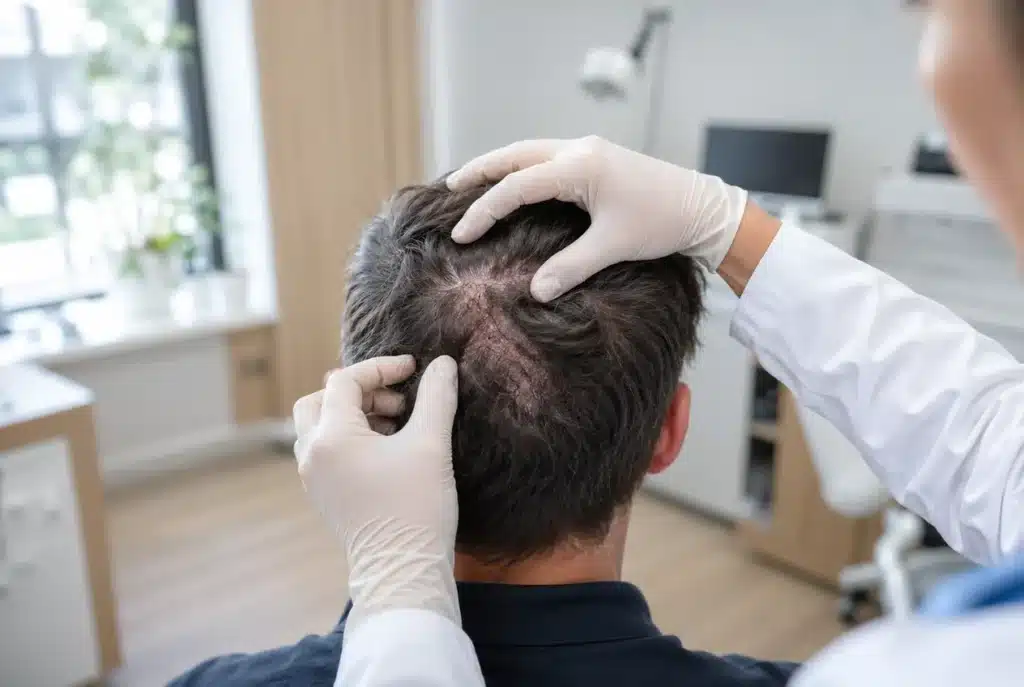
Een dermatoloog kan via huidonderzoek, allergietesten en eventueel een kleine biopsie de juiste diagnose stellen. Op basis daarvan wordt een persoonlijk behandelplan opgesteld, dat kan variëren van topicale geneesmiddelen tot lichttherapie of orale medicatie bij ernstige vormen.
Eczeem op de hoofdhuid en een haartransplantatie
Een haartransplantatie is in principe mogelijk wanneer het eczeem op de hoofdhuid stabiel is en onder controle staat. Een actieve, ontstoken hoofdhuid wordt eerst behandeld en gestabiliseerd, omdat een rustige huid de inheling van de getransplanteerde grafts ondersteunt en het risico op complicaties beperkt. Tijdens een eerste consult bij Hairtec wordt de hoofdhuid daarom altijd zorgvuldig beoordeeld.
Bij Hairtec is DHI onze primaire behandelmethode. Met de Choi-implanterpen worden de haren direct geïmplanteerd, zonder dat er vooraf kanaaltjes in de huid worden gemaakt. Dat geeft minder weefselverstoring dan methoden waarbij de huid eerst wordt geopend, wat bij een hoofdhuid die gevoelig is voor ontstekingen een technisch voordeel kan zijn. De belangrijkste voorwaarde blijft echter een gestabiliseerde uitgangssituatie.
Wanneer uw eczeem op dat moment actief is, bespreken wij eerst een passend voortraject. Dit kan bestaan uit een dermatologische beoordeling, een aangepast verzorgingsprotocol en een wachtperiode waarin de hoofdhuid tot rust komt. Pas wanneer de huid kalm en stabiel is, plannen wij de behandeling in.
Veelgestelde vragen over eczeem op de hoofdhuid
Wat veroorzaakt een rode hoofdhuid met jeuk en schilfers?
Eczeem op de hoofdhuid is een verzamelnaam voor huidontstekingen die roodheid, schilfering en jeuk veroorzaken. Naast het bekende seborroïsch eczeem kunnen ook contacteczeem en atopisch eczeem deze niet-besmettelijke klachten veroorzaken. Welke aanpak het beste werkt, hangt af van de juiste diagnose.
Wat is het verschil tussen eczeem, roos en psoriasis op de hoofdhuid?
Roos geeft losse schilfers met weinig roodheid. Eczeem geeft rode, schilferende en jeukende plekken met een vage begrenzing. Psoriasis geeft dikkere, scherp begrensde plekken met zilverwitte schilfers. Omdat de beelden op elkaar lijken, stelt een arts bij twijfel de diagnose op basis van het patroon en de voorgeschiedenis.
Kan stress eczeem op de hoofdhuid verergeren?
Ja, stress is een bekende trigger die een opvlamming kan uitlokken of verergeren. Ook warmte, transpiratie, agressieve haarproducten en het seizoen spelen een rol. Het beperken van triggers en het inbouwen van ontspanningsmomenten in uw dagritme helpen om de klachten rustig te houden.
Welke shampoo helpt bij eczeem op de hoofdhuid?
Een milde, parfumvrije shampoo vormt de basis van de dagelijkse verzorging. Bij seborroïsch eczeem helpen shampoos met ketoconazol of zinkpyrithion om de overgroei van Malassezia te remmen. Bij hardnekkige of hevige klachten kan een arts kortdurend een lotion of crème met een ontstekingsremmer voorschrijven.
Kan ik een haartransplantatie krijgen met eczeem op de hoofdhuid?
Meestal wel, zolang het eczeem rustig en onder controle is. Een actieve, ontstoken hoofdhuid wordt eerst behandeld, omdat een gezonde huid de inheling van de grafts ondersteunt en het risico op complicaties beperkt. Een arts beoordeelt vooraf altijd de uitgangssituatie van uw hoofdhuid.
Hoe we dit artikel hebben beoordeeld:
Hairtec.nl hanteert strenge richtlijnen voor het selecteren van bronnen en baseert zich op peer-reviewed studies, academische onderzoeksinstellingen en medische tijdschriften en verenigingen. We gebruiken alleen hoogwaardige, betrouwbare bronnen om de nauwkeurigheid en integriteit van onze inhoud te waarborgen. Meer informatie over hoe we ervoor zorgen dat onze inhoud nauwkeurig en actueel is, vindt u in ons redactioneel beleid.
Onze experts houden de gezondheids- en welzijnssector voortdurend in de gaten en we werken onze artikelen bij zodra er nieuwe informatie beschikbaar komt.